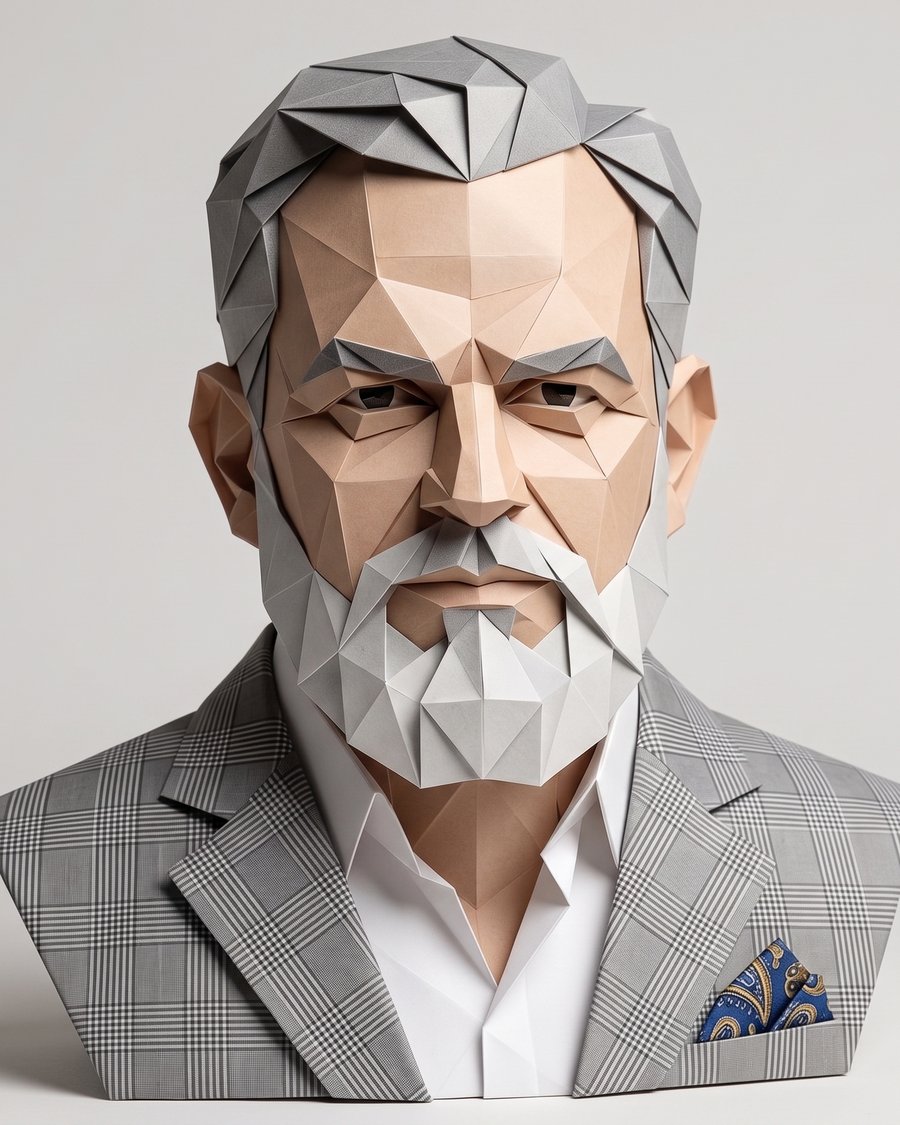
The author
Eleftherios Antoniades
A technologist, entrepreneur, strategist, and author whose work has been shaped by a lifelong fascination with the relationship between technology and human progress.
As Founder and CTO of Odyssey Cybersecurity and the architect behind the ClearSkies platform, he has spent more than three decades working at the frontier of cybersecurity, artificial intelligence, and autonomous systems, experiencing firsthand how technologies that begin as tools can evolve into infrastructure that reshapes economies, institutions, power, and everyday life.
His interests extend beyond the technologies themselves to the larger questions they create. What happens to human agency when machines can reason and act autonomously? How will artificial intelligence alter the distribution of economic and geopolitical power? What becomes of work, ownership, privacy, sovereignty, and identity when intelligence is abundant? And, ultimately, how can humanity ensure that technological progress expands human possibility rather than diminishing the qualities that make us human?
These questions form the intellectual foundation of Life in 2045: Humanity, Power, and Technology in the Age of Intelligent Systems. Drawing on decades spent observing technological change from inside the industry, Antoniades examines the convergence of artificial intelligence, biotechnology, autonomous systems, shifting economic models, intelligent infrastructure, geopolitical competition, and humanity's expansion beyond Earth. Rather than attempting to predict the future, his work explores the choices being made today that may determine which futures remain possible tomorrow.
Away from technology and strategy, his interests are deliberately physical, creative, and human. He has a lifelong passion for building and customizing motorcycles, particularly Harley-Davidsons, machines that represent to him the enduring appeal of mechanical craftsmanship in an increasingly digital world. Photography provides another way of observing the world: an exercise in attention, perspective, light, and the preservation of moments that technology can record but only a human being can decide are worth remembering.
And then there are his six cats, whose independence, curiosity, unpredictability, and complete disregard for technological progress provide a useful reminder that intelligence has never belonged exclusively to humans or to machines.
Across his professional work, writing, and personal pursuits runs a common fascination: how intelligence shapes the world around it. Life in 2045 is an extension of that fascination and of a conviction that the defining question of the coming decades will not simply be what technology becomes capable of doing. It will be what humanity chooses to become alongside it.
Areas of expertise
What he is asked about
Machine intelligence
Agentic systems, edge deployment, and what changes when intent replaces the prompt.
Digital sovereignty
Sovereign AI stacks, data colonialism, and infrastructure as statecraft.
Autonomous cyber defense
Machine-speed offense, self-healing defense, and the accountability that goes missing between them.
Geopolitical strategy
Technopolar power, weaponized interdependence, and where the lock-in windows are.
Speaking
Keynotes and board briefings
Topics map to the eight Parts, from agentic operations and sovereign stacks to post-labor ownership and machine-speed security.
Past engagements: <<ENGAGEMENT>> · <<ENGAGEMENT>> · <<ENGAGEMENT>>
Send an enquiry